Famous Engineering Subject Behind the art of Reverse Swing
If you are an ardent cricket fan then you might have come across a term called `Reverse swing’. Have you ever wondered what it is? And do you know that a chemical engineering concept is involved in this? If you are not aware of these then certainly you must go through this:
What is Reverse Swing?
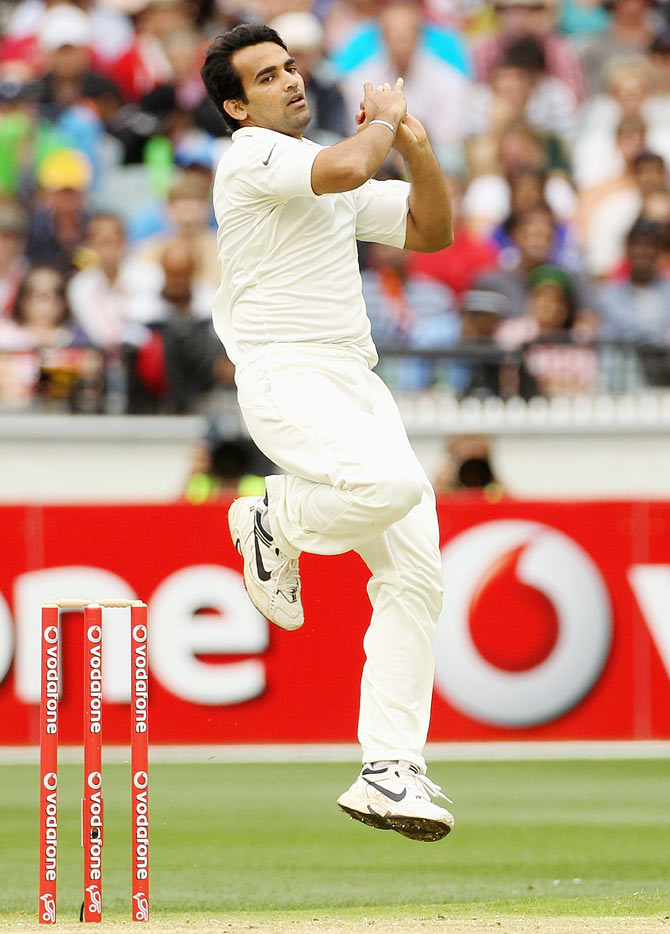
Reverse swing is an effective art of swinging the ball where the ball turns inwards rather than moving the ball away from the batsman. To make it simple if a bowler bowls an Out-swinger it turns up as an Inswinger and vice-versa. This phenomenon happens only when the ball is gradually getting worn out, perhaps somewhere between the 35th to 40th over. This scene is prominently visible in test matches than in the One-day cricket.
Science behind it:

Abhishek Reddy Putchala
credits
pic: https://www.rediff.com/cricket/report/what-you-must-know-about-zak-the-ripper-pix-zaheer-khan/20151015.htm
source: DNA,Financial express
What is Reverse Swing?
Reverse swing is an effective art of swinging the ball where the ball turns inwards rather than moving the ball away from the batsman. To make it simple if a bowler bowls an Out-swinger it turns up as an Inswinger and vice-versa. This phenomenon happens only when the ball is gradually getting worn out, perhaps somewhere between the 35th to 40th over. This scene is prominently visible in test matches than in the One-day cricket.
Science behind it:
Reverse Swing The name comes from the fact that this technique produces swing which was opposite to that expected based on conventional cricketing wisdom and previously accepted fluid mechanics principles. The polished (non-seam) surface has a laminar boundary layer developing over it, and the seam side develops a turbulent boundary layer. As the critical speed approaches, the laminar boundary layer on the non-seam side undergoes transition and the flow asymmetry, and hence side force starts to decrease. A further increase in Reynolds Number causes an increased transition in the polished surface, and corresponding separation points move upstream towards the front of the ball. On progressively increasing Reynolds Number, the flow conditions
on both the surfaces become symmetric, that is the separation points become equidistant. In this condition, the side force, hence swing becomes zero. Reverse swing occurs when the Reynolds Number is increased beyond this symmetric flow condition. When that happens, the boundary layer separation points move further upstream, while remaining symmetrical. However, the turbulent boundary layer on the seam side has to encounter the seam, which hinders flow, causing a thicker and much weaker boundary layer, prone to early separation. The turbulent boundary layer on the seam side separates relatively early and an asymmetric flow is set up once again, only now the orientation of the asymmetry is reversed such that the side force, and hence swing, occurs towards the non-seam side.
on both the surfaces become symmetric, that is the separation points become equidistant. In this condition, the side force, hence swing becomes zero. Reverse swing occurs when the Reynolds Number is increased beyond this symmetric flow condition. When that happens, the boundary layer separation points move further upstream, while remaining symmetrical. However, the turbulent boundary layer on the seam side has to encounter the seam, which hinders flow, causing a thicker and much weaker boundary layer, prone to early separation. The turbulent boundary layer on the seam side separates relatively early and an asymmetric flow is set up once again, only now the orientation of the asymmetry is reversed such that the side force, and hence swing, occurs towards the non-seam side.

pic source: Quora.
Abhishek Reddy Putchala
credits
pic: https://www.rediff.com/cricket/report/what-you-must-know-about-zak-the-ripper-pix-zaheer-khan/20151015.htm
source: DNA,Financial express


Comments
Post a Comment